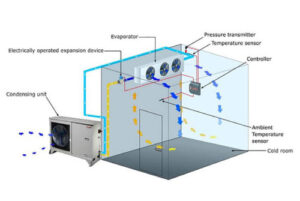


Fruits and vegetables continue to breathe even after harvesting. During respiration, they produce not only carbon dioxide and water, but also ethylene (CC₂H₄). Ethylene is a plant hormone that exists in gaseous form. Its role is to regulate processes related to aging and ripening. When this gas accumulates, fruits and vegetables ripen rapidly, which ultimately leads to a decline in quality and a shorter shelf life, affecting their taste, texture, and appearance.
With our equipment, we recommend, depending on conditions, two methods for removing ethylene from fruit and vegetable storage rooms: photocatalytic oxidation and through VUV photolysis technique. Photocatalytic oxidation (PCO) is suitable for the destruction of volatile organic compounds, including ethylene.
UVT
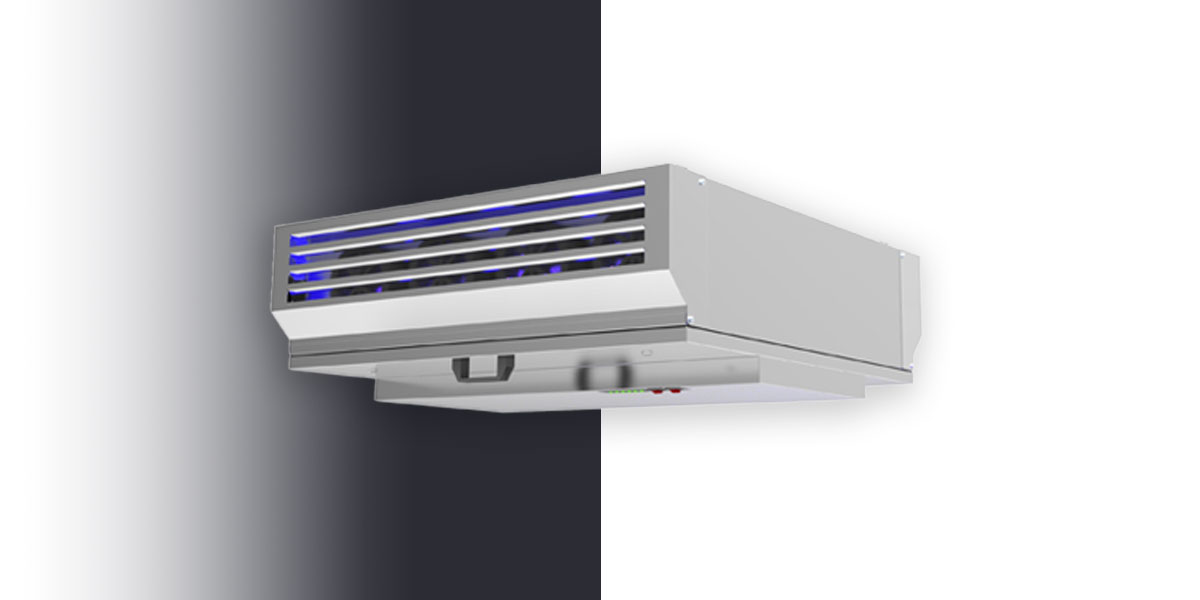
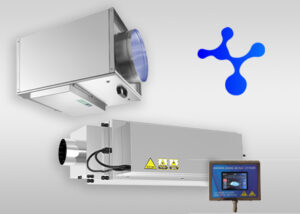
In our ceiling-mounted UVT units, designed for industrial use, we utilize a surface coated with titanium dioxide, a photocatalyst. We leverage the synergistic effect of UV-C light and the TiO2 photocatalyst. Fans are integrated into the unit to recirculate the air from the warehouse. The air is first exposed to UV-C light, which has a disinfecting effect, and then passes over the catalytic plate activated by ultraviolet radiation.
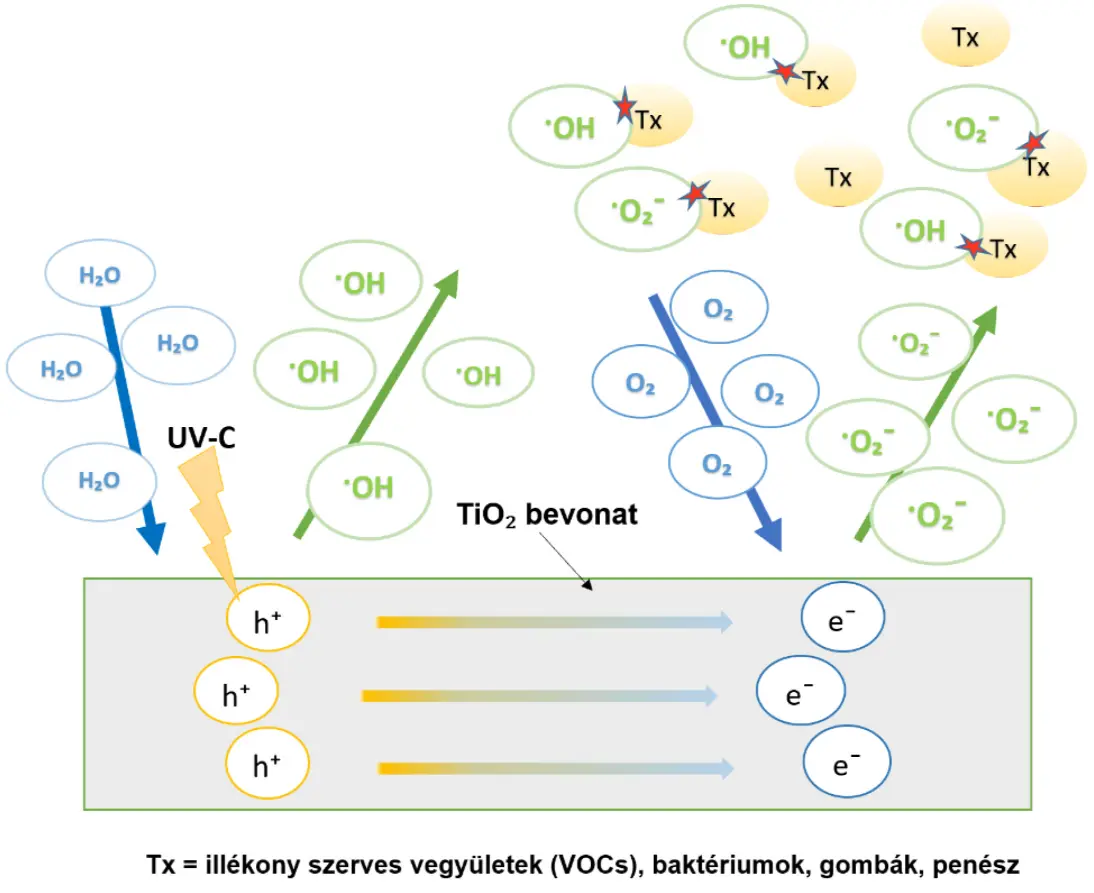
The titanium dioxide coating mentioned above is a semiconductor which, when illuminated with light of a certain wavelength, causes electrons to be releasede¯) into the conduction band, leaving holes (h⁺) in their place. The holes have a strong oxidizing effect, while the electrons have a strong reducing effect.·OH), and reactive superoxide radicals are formed from the oxygen in the air (·O2–). As a result, volatile organic compounds break down, and microorganisms are destroyed due to damage to their DNA structure. Microbes and organic substances are mineralized, producing carbon dioxide and water.
VUV photolysis technique is also suitable for the destruction of volatile organic compounds, including ethylene:
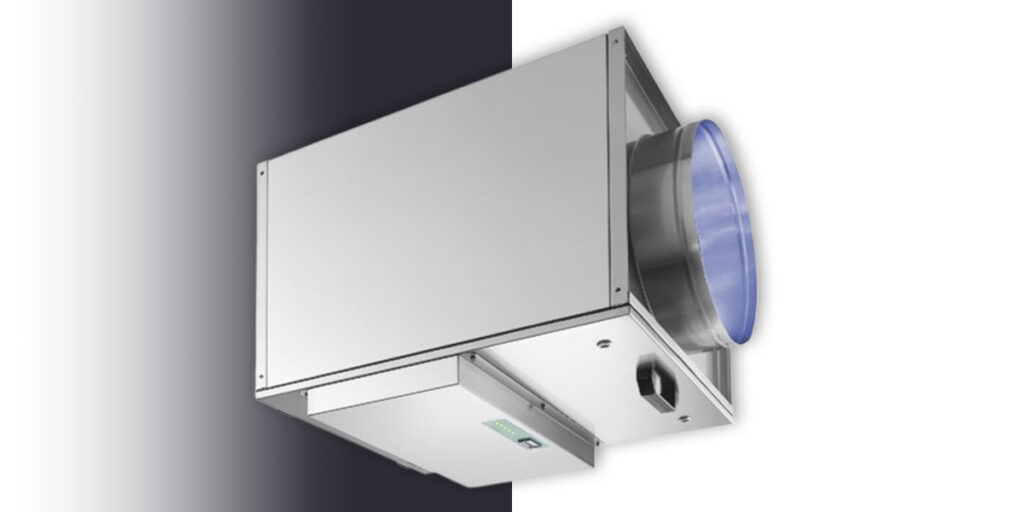
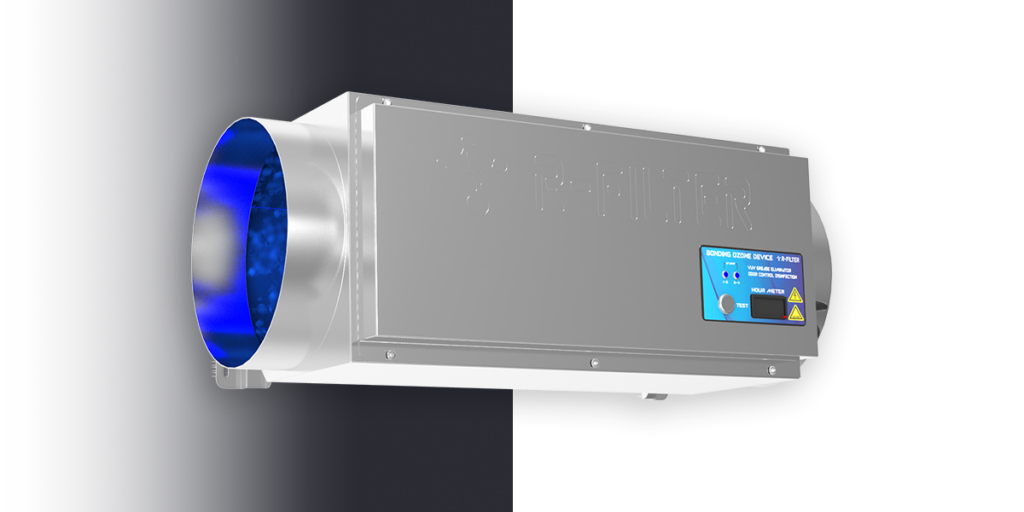
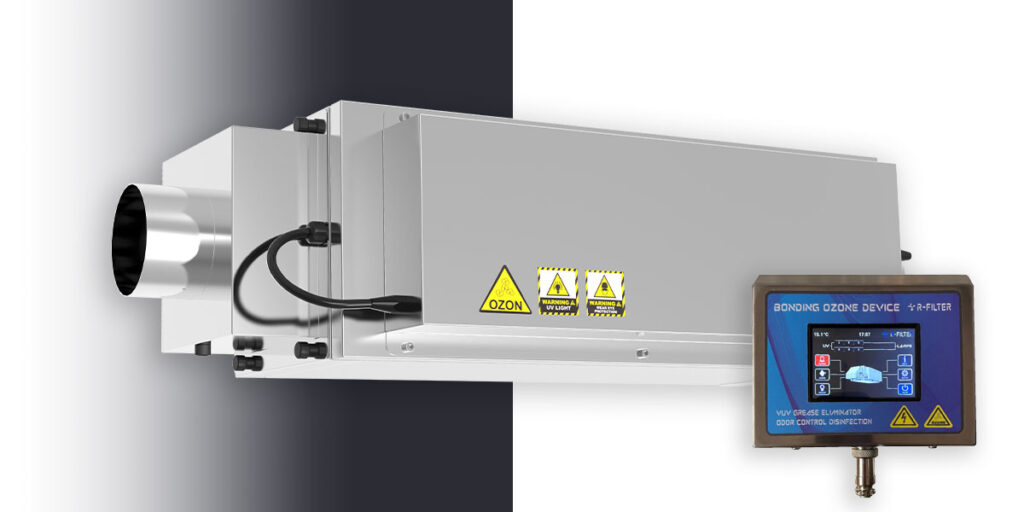
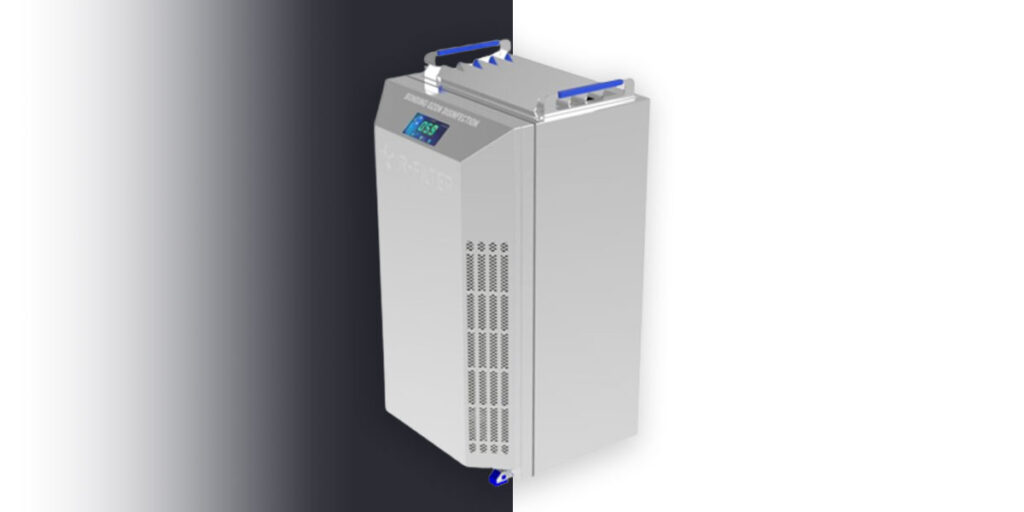
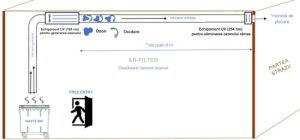
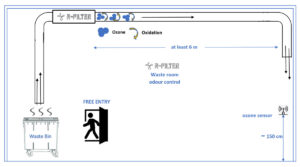
In the reactor chamber, broad-spectrum VUV lamps generate large amounts of ozone from the oxygen in the air at a wavelength of 185 nm. The ozone molecules that exit the R-FILTER units and enter the fruit and vegetable storage area oxidize ethylene, which is present as a volatile organic compound, as well as bacteria, fungi, and mold.
As an effect of ozone treatment, ethylene is oxidized to carbon dioxide and water:
C₂H₄ + 6O₃ → 2CO₂ + 2H₂O + 6O₂
Equipment UVS and UVS-M produce ozone inside the storage ventilation duct system. The equipment UVO-C introduce ozone into the storage ventilation duct or directly into the storage space, and the mobile equipment UVO directly into the warehouse. If the equipment generates ozone from the oxygen in the warehouse air, the bactericidal, fungicidal, and mold-inhibiting effects of 254 nm UV light are also present. Ozone has a strong, pungent odor, similar to chlorine. Its oxidizing effect strongly irritates the respiratory tract. The permissible occupational exposure limits for ozone, in international comparison, are:
- 0,1 ppm (0,2 mg/m³) for an 8-hour working day
- 0.2 ppm (0.4 mg/m³) for up to 15 minutes
The ozone concentration required to break down ethylene depends on the size of the storage facility, its intended use, and the type of fruits and vegetables; according to the literature, concentrations as low as 0.1–0.3 ppm can be effective. Storage facilities are typically areas with higher humidity. Ozone breaks down rapidly in high-humidity environments, so it must be dispersed quickly throughout the entire area. Regarding ethylene removal, the following differences exist between the two methods presented:
- The removal of ethylene via VUV photolysis is much faster than via PCO. The reason is that photocatalysis occurs primarily on the surface of the catalyst, whereas photolysis occurs in the gas phase. As a result, VUV photolysis ensures faster and more efficient removal of ethylene.
- High relative humidity accelerates the oxidation of ethylene in photolysis, unlike in PCO. Ozone, even at very low concentrations but under conditions of high humidity, has a significant germicidal effect on microorganisms in the air. Ozone sterilization is effective only on sufficiently hydrated cells.
- Lower temperature only hinders ethylene oxidation in the case of the photolysis technique.
- Performing photolysis treatment requires great care. During treatment, the permissible occupational exposure limits for ozone must be observed. After treatment, the facility must be ventilated. For safety instructions, refer to the equipment’s user manual.
Reference:
[1]: Efficacy of photocatalysis and photolysis systems for the removal of ethylene under different storage conditions
Postharvest Biology and Technology, Volume 147, 2019
Namrata Pathak, ……, Promod V. Mahajan