
Figure 1
Waste storage areas, waste sorting facilities, recycling centers, and local waste collection sites often have a highly disruptive impact on the surrounding environment due to the odors they generate. Our R-FILTER UV-ozone generators effectively reduce unwanted odors in these areas. Garbage odors, bacteria, and microorganisms break down and cease to exist under the action of germicidal UV light (254 nm) and ozone-generating UV light (185 nm).
With our UV-ozone generators, we can act in three different ways during the deodorization of waste storage facilities.
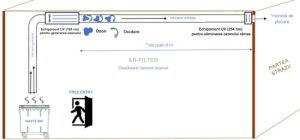
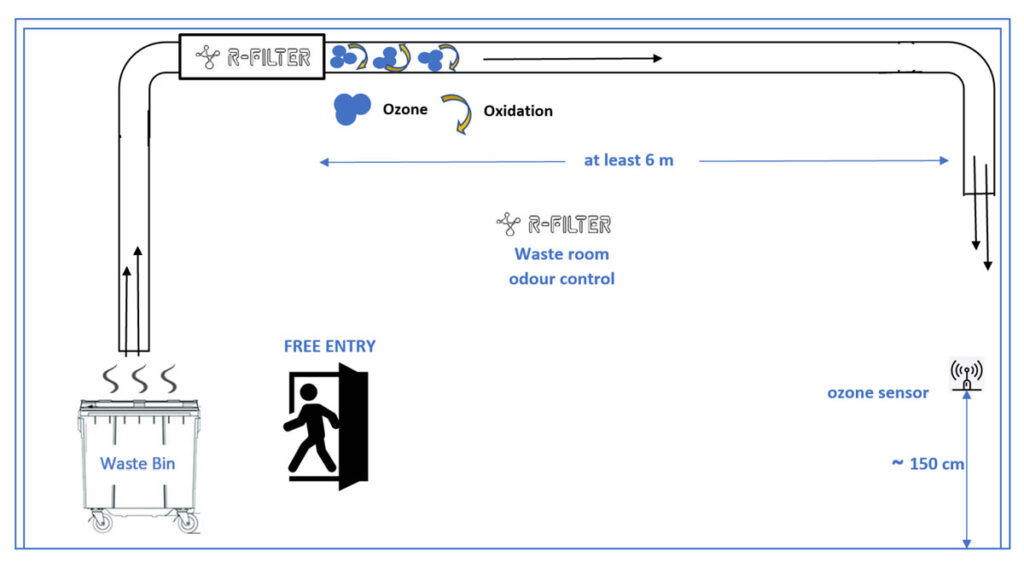
1., Treatment takes place inside the storage space (Figure 1)
Ozone has a strong, pungent, chlorine-like smell. Its oxidizing effect strongly irritates the respiratory tract.
0,1 ppm (0,2 mg/m³) for an 8-hour working day
If the sensor that detects ozone concentration is set to respond at a level below the limit established in that country, we will never exceed the permissible limit. When the set level is reached, the equipment’s ozone-generating lamps always shut off, while the germicidal lamps remain operational and continue to disinfect the air continuously. Since there is dust and impurities in waste storage facilities, and the air is recirculated back into the space, it must be filtered inside the equipment, before the UV lamps, using a coarse filter and then a fine filter.
2., Treatment takes place in the exhaust air from the storage space (Figure 2)
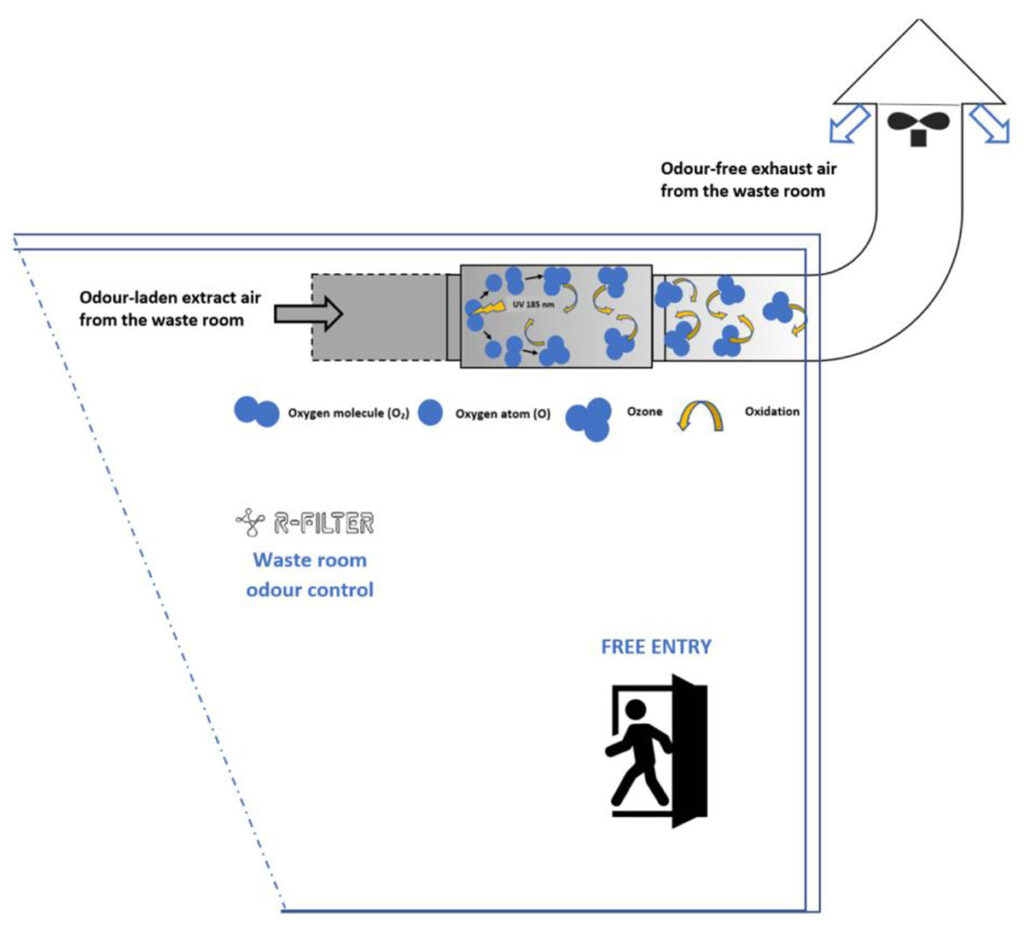
Figure 2
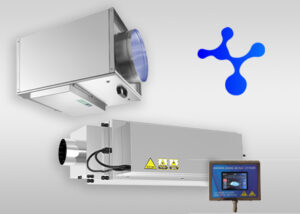
Our ozone generator (UVS-M) is installed in the exhaust air duct from the storage area, connected to the building’s exhaust system, meaning we treat the exhaust air. This protects neighbors and the surrounding environment from unpleasant odors. During treatment, the storage area can be accessed because it is the exhaust air that is being treated.
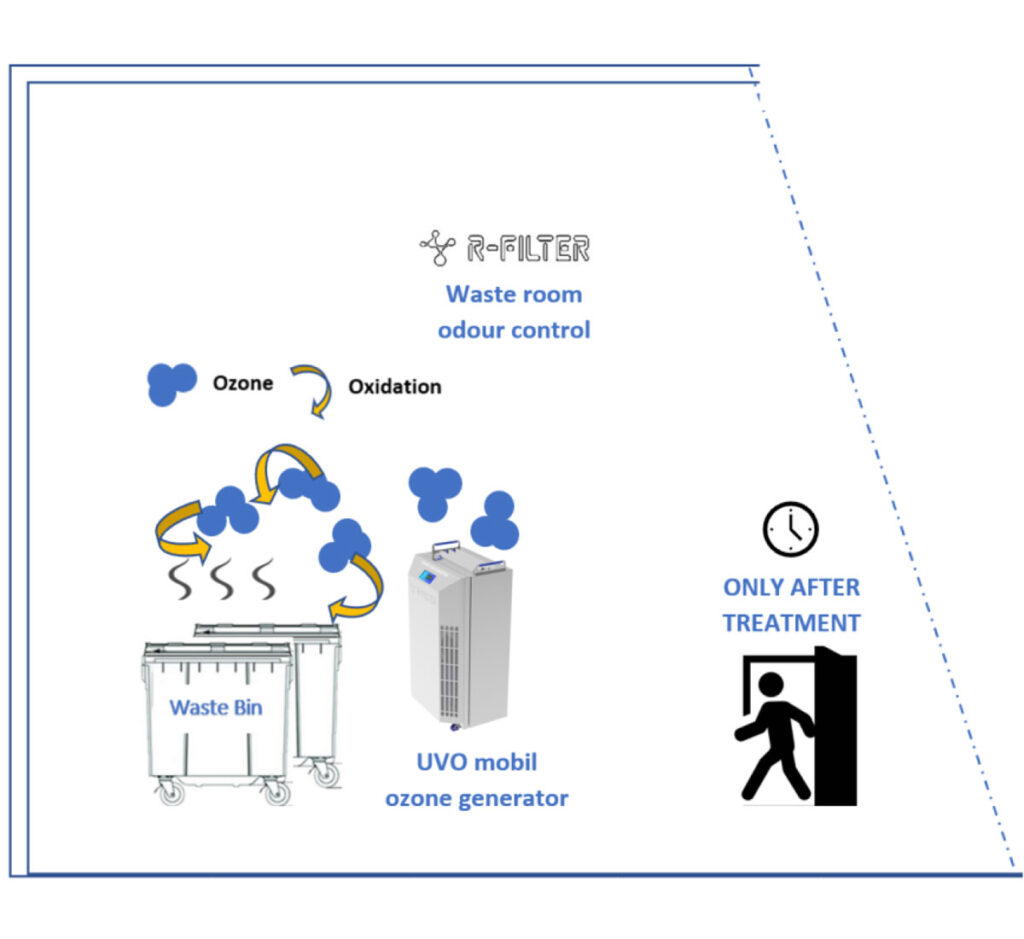
Figure 3
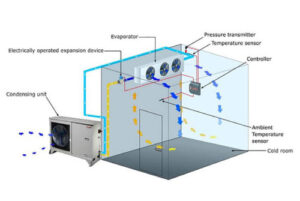
After introducing the amount of ozone applied to the space to be treated, at the end of the timed treatment process, the ozone-generating lamps shut off automatically, leaving only the fans running to facilitate the breakdown of any residual ozone not consumed during the treatment. The radiation spectrum of the VUV lamps used not only enables ozone production but, by emitting at 254 nm, also exerts a powerful germicidal effect—that is, it acts as a disinfectant and bactericide. The required amount of ozone depends on two factors: the size of the room and the type of waste to be treated. It is a gas that can reach every corner of the room, deodorizing and disinfecting the entire space. During ozone treatment, access to the storage area is not permitted, as ozone is harmful to the respiratory tract. The ozone safety data sheet provides information on safety measures and first aid. After treatment, any residual ozone must be checked with an ozone detector, taking into account the permissible limit values, and the space must be thoroughly ventilated.