
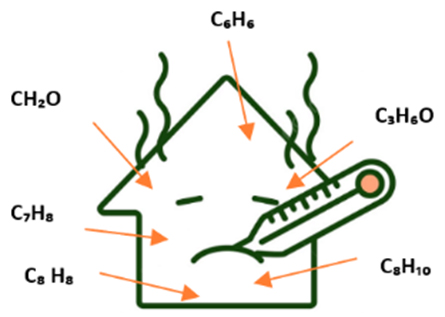
Sick Building Syndrome (SBS) is a term used to describe a range of symptoms experienced by people in a particular enclosed space due to poor air quality. These symptoms may include headaches, eye or respiratory irritation, fatigue, difficulty concentrating, and others. SBS can be associated with numerous factors, and volatile organic compounds (VOCs) often play a role in this phenomenon.
VOCs (Volatile Organic Compounds) are organic compounds that easily evaporate into the air at room temperature from liquid or solid substances. In buildings, they can originate from various materials, such as paints, varnishes, adhesives, cleaning products, furniture, and other materials.
How can Sick Building Syndrome be prevented?
Measures to avoid SBS may include:
Adequate ventilation: Ensure that the building is properly ventilated.
Use of low-VOC materials: Choosing construction materials, furniture, paints and cleaning products with low or zero VOC emissions.
Regular maintenance: Regular maintenance of the building's heating, ventilation and air conditioning systems.
Off-gassing period: After installing new materials or renovation work, ensure an off-gassing period during which the space is well ventilated.
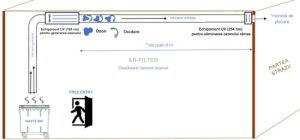
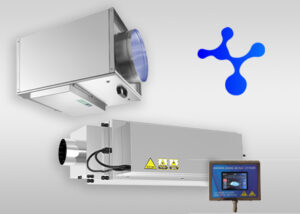
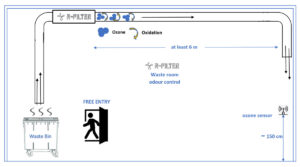
Air purification: For the removal of volatile organic compounds, we recommend our UVO ozone generator with UV lamp as an effective method.
The most frequently encountered volatile organic compounds in the context of SBS and their neutralization reactions with ozone gas:
Formaldehyde: CH₂O
Common sources: veneer, fiberboard, particleboard, adhesives, thermal insulation materials and some textiles.
Reaction: CH2O + 2O3 -> CO2 + H2O + 2O2
Acetone: C₃H₆O
Common sources: nail polish remover, paint thinners and some cleaning products.
Reaction: C3H6O + 8O3 -> 3CO2 + 3H2O + 8O2
Benzene: C₆H₆
Common sources: cigarette smoke, paints, solvents and some cleaning products.
Reaction: C6H6 + 11O3 -> 6CO2 + 3H2O + 11O2
Toluene: C₇H₈
Common sources: paints, paint thinners, adhesives and some cleaning products.
Reaction with ozone: C7H8 + 18O3 -> 7CO2 + 4H2O + 18O2
Styrene: C₈ H₈
Common sources: insulation materials, carpets, synthetic rubbers.
Reaction: C8H8 + 20O3 -> 8CO2 + 4H2O + 20O2
Xylene: C₈H₁₀
Common sources: paints, lacquers, adhesives and some office equipment.
Reaction: C8H10 + 21O3 -> 8CO2 + 5H2O + 21O2
If you experience symptoms that may be linked to poor indoor air quality, it is important to consult a healthcare professional and contact building experts to assess and address the potential source of the problem.
When a new building is being constructed or renovated, volatile organic compounds may be released in higher concentrations.
The ozone produced by our equipment UVO is capable of decomposing volatile organic compounds in the air and effectively neutralizes unpleasant odors.
Ozone has antimicrobial properties and also helps combat bacteria, viruses and mold.
If you are considering ozone treatment for indoor air quality, take into account the following recommendations:
Seek the opinion of indoor air quality specialists for specific problems.
Use our ozone generator adapted to the room size and follow the safety instructions.
Evacuate the treated room before applying the ozone treatment. Ensure adequate ventilation before people return.
Make sure that ozone concentrations remain within the recommended safety limits.